Why That Perfect Meal Abroad Never Tastes the Same Back Home
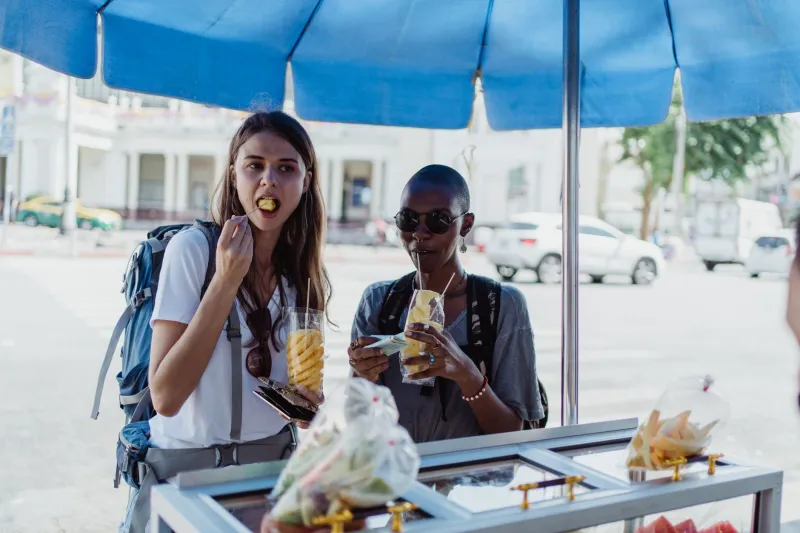
It starts innocently enough. You're back in your apartment, jet-lagged and a little hollow, scrolling through photos from the trip. You land on one — a steaming bowl of ramen at a tiny counter spot in Tokyo, or a plate of handmade pasta in Bologna, or a fish taco from a cart on the beach in Baja. Your stomach does something complicated. You think: I need that again.
So you go looking for it. Maybe you find a well-reviewed restaurant nearby. Maybe you order the closest approximation on DoorDash. Maybe you even attempt it yourself, tracking down specialty ingredients and watching YouTube tutorials at midnight. And then you take that first bite — and it's fine. It might even be good. But it's not that. It's not the thing you were chasing.
This is the reverse culture shock nobody warns you about. Not the re-entry fatigue, not the weird grief of unpacking your bag, but the quiet devastation of discovering that the food you fell in love with abroad doesn't seem to exist anywhere in your actual life.
It's Not Just About the Ingredients
The easy explanation is a practical one: the ingredients are different. And that part is real. Tomatoes grown in the volcanic soil of southern Italy have a sweetness that hothouse tomatoes shipped to a Midwest grocery store simply cannot replicate. Thai basil sourced in Bangkok and Thai basil sold in a plastic clamshell in a US supermarket are, technically, the same plant — and also somehow not the same plant at all. Water chemistry affects bread. Altitude affects cooking times. The fish is fresher when you're forty feet from the ocean.
But here's the thing: even when you find genuinely good versions of those dishes in the US — and they do exist — the magic still often feels slightly out of reach. A Michelin-starred French restaurant in New York can produce a technically flawless croissant. It might even be better, by some objective measure, than the one you ate standing on a sidewalk in Lyon. And yet.
The ingredient argument only gets you so far.
Your Brain Cooked That Meal Too
Memory is a sneaky collaborator in any dining experience. When you ate that dish abroad, you weren't just tasting the food — you were tasting the whole moment. The unfamiliar street sounds, the slight exhaustion from a long day of wandering, the company you were with, the way the light hit the table, the fact that you'd been looking forward to it for days or stumbled upon it completely by accident. All of that gets folded into the flavor profile in ways your brain doesn't bother to separate out.
Psychologists call this context-dependent memory. We don't just remember things — we remember things as they happened, wrapped in the sensory environment that surrounded them. Which means when you try to recreate that meal at home, you're not just missing the ingredients. You're missing the entire world that made it taste the way it did.
Back home, you're eating that dish in your kitchen or in a strip mall restaurant while thinking about your inbox. That's a different meal. It always will be.
The Nostalgia Trap
There's also something worth examining in what we're actually craving when we chase these tastes. Is it the food? Or is it the feeling of being somewhere else — somewhere where you were curious and open and free from your regular routine?
Travel has a way of making us more present. You notice things abroad that you'd sleepwalk past at home. You're paying attention. And when you're paying attention, food tastes better. Not metaphorically — literally. Studies on mindful eating consistently show that the same food tastes more complex and satisfying when we slow down and actually focus on it. Travel forces that slowness on us, whether we want it or not.
So the croissant in Lyon wasn't just better because of the butter. It was better because you were there, fully, in a way that's genuinely hard to replicate on a Tuesday morning before a 9 a.m. call.
What to Do With the Disappointment
First: let yourself feel it. The mild grief of a meal that doesn't live up to the memory is a real thing, and pretending otherwise doesn't help. It's okay to be a little sad that you can't just teleport back to that trattoria.
But then — reframe it. The fact that the food tasted so extraordinary abroad isn't a bug in the system. It's actually proof that travel is doing something real to you. It's shaking you out of autopilot. It's making the ordinary feel extraordinary. That's worth something.
You can also stop trying to recreate the exact experience and start trying to create a new one. Find a Vietnamese restaurant in your city run by someone whose family has been making pho for generations, and go in with genuine curiosity instead of a comparison checklist. You might not find the Hanoi experience — but you might find something that earns its own place in your memory.
And if you're a cook, consider this: the goal isn't to reproduce the dish exactly. It's to learn something from it. Bring back a spice you've never used before. Try a technique you watched someone use at a street market. Let the travel influence your kitchen without demanding that your kitchen become a time machine.
Some Tastes Are Meant to Stay Where You Found Them
There's a kind of wisdom in accepting that certain experiences are site-specific. The whole point of traveling — really traveling, not just relocating your phone-scrolling to a prettier backdrop — is to encounter things that don't exist in your regular life. A meal that tastes perfect only in the place you ate it isn't a failure of logistics. It's a reason to go back.
Or a reason to go somewhere new, where something else will rearrange your idea of what food can be.
The reverse culture shock diet isn't really about food at all. It's about the way travel spoils you for ordinary life — and then dares you to keep raising the stakes. You chased a flavor once. You'll chase it again. The destination might change, but the hunger doesn't.
And honestly? That's the whole point.