Put the Phone Down: Why Getting a Little Lost Is the Best Navigation Strategy You've Never Tried
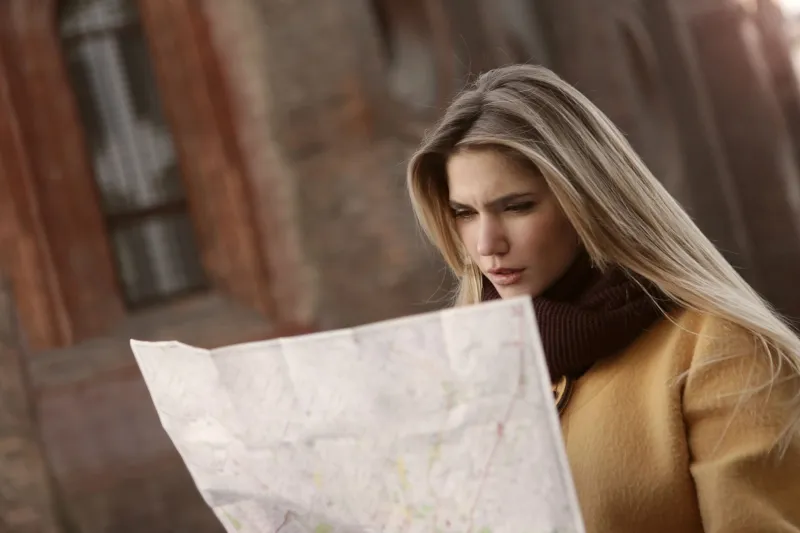
There's a moment that happens on almost every trip. You're walking somewhere — a market, a cathedral, a beach — and your phone buzzes with a reroute notification. You glance down, adjust course, and keep moving. Efficient. Purposeful. Completely on track.
And completely missing the point.
Somewhere between the rise of Google Maps and the explosion of travel apps promising to optimize every waking minute of your itinerary, we quietly traded wandering for routing. We stopped navigating and started following. And the trips have gotten a little flatter because of it.
This isn't a rant against technology. It's more of a gentle nudge — a reminder that the blue dot isn't actually showing you the city. It's showing you the fastest path through it.
What You Miss When You're Always On Track
Think about the best travel memory you have. Really think about it. Odds are, it didn't happen because an app told you to go there. It happened because you turned the wrong way, or someone on the street said "you should really check out that place around the corner," or you just kept walking past where you were supposed to stop.
That's not an accident. That's how real discovery works.
When you outsource your navigation entirely to a device, you stop reading your environment. You stop noticing that the street gets quieter and more residential — which usually means you're getting close to where locals actually eat. You stop registering the smell of fresh bread, or the sound of music coming from a courtyard, or the handwritten sign in a window that says something intriguing in a language you barely speak.
GPS is incredible at getting you from Point A to Point B. It's terrible at helping you figure out that Point C even exists.
The Quiet Confidence of Knowing a Little Less
Here's the thing about asking for directions: it's actually a travel superpower that most Americans have completely forgotten how to use.
In cities across the US, we've become so conditioned to self-sufficiency — there's an app for that, we'll figure it out — that we've stopped treating locals like the living, breathing resource they are. A bartender in New Orleans. A shopkeeper in Santa Fe. A retiree feeding pigeons in a Savannah square. These people know things no algorithm does. They know which block gets sketchy after dark, which restaurant has been quietly serving the best gumbo for forty years, and which tourist trap to avoid with extreme prejudice.
But you only access that knowledge if you put the phone away long enough to make eye contact and ask.
It feels awkward at first, especially if you're used to navigating solo and silently. Push through it. The conversation that starts with "hey, do you know where I can find—" has a funny way of becoming the highlight of the day.
Paper Maps Aren't Retro. They're Actually Better for This.
Before you roll your eyes — hear this out.
A paper map forces you to understand context. When you look at a city on paper, you see the relationship between neighborhoods. You see how far things actually are from each other. You notice that the museum you wanted to visit is right next to a district you've never heard of, and suddenly you're curious about that district.
Digital maps flatten all of that into a turn-by-turn sequence. They answer the question "how do I get there?" without ever letting you ask "wait, what else is around there?"
Many tourist offices still hand out printed city maps for free. Bookstores carry fold-out maps of major destinations. Some travelers swear by buying a cheap local street atlas when they arrive — not to use exclusively, but to orient themselves before they head out each morning. Even spending five minutes with a paper map at breakfast can completely change how you move through a place during the day.
You don't have to go full analog. But giving yourself a spatial understanding of a destination before you start tapping addresses into your phone makes you a fundamentally more aware traveler.
How to Build a "Productive Getting Lost" Practice
There's a difference between being completely disoriented in an unfamiliar place at midnight and intentionally giving yourself space to wander without a fixed destination. The first one is stressful. The second one is kind of the whole point of travel.
A few things that actually work:
Set a landmark, not an address. Instead of navigating to a specific restaurant, navigate to the general neighborhood and then walk around until something catches your eye. Give yourself thirty minutes of exploration before you commit to anything.
Use maps for orientation, not instruction. Check your map to confirm which direction you're heading — north, toward the river, away from the highway — and then put it away. Let your feet make the smaller decisions.
Build in a daily wander. Some travelers block out an hour each afternoon with no destination, no agenda, and no phone navigation. Just walking. It sounds indulgent until you realize that most of their best trip stories come from that hour.
Screenshot the essentials before you go. If you're heading somewhere unfamiliar, screenshot your hotel address and a rough map of the area. That way you have a safety net without being constantly tethered to your screen.
Learn two or three landmark phrases in the local language. Even in English-speaking cities, knowing how to ask "is this the way to the old town?" or "can you point me toward the waterfront?" opens up interactions that GPS never would.
The City You're Missing Right Now
Every destination has a version of itself that exists just slightly off the suggested route. It's the version that locals actually live in — the one with the weird little coffee shop that's been there since the '70s, the mural that didn't make it onto any listicle, the neighborhood park where everyone seems to know each other.
You can't find that version by following a blue dot. You find it by slowing down, looking up, and accepting that the best part of the trip might be the part you didn't plan for.
Your GPS will always be there when you genuinely need it. But try giving yourself permission to need it a little less. The maps you're trusting to show you everything are quietly hiding the parts worth finding.
And those parts? They're usually right around the corner from where you were headed anyway.