Saving Every Dollar, Spending Something Else: The Real Price of Bargain Travel
There's a particular kind of high that comes with finding a flight for $180 round trip to somewhere you've been dreaming about for years. You screenshot it. You text three people. You maybe even do a small, undignified dance in your kitchen. Getting a great deal feels like a skill — proof that you're a savvy traveler who's figured out the system.
But here's the thing nobody talks about in the travel hacking forums or the budget travel subreddits: the cheapest version of a trip is rarely free of cost. It just shifts the bill somewhere less visible — onto your own experience, onto your sense of safety, or onto the very communities you showed up to explore.
This isn't a lecture. It's more of an honest reckoning, the kind that tends to happen somewhere around your third or fourth trip when the novelty of roughing it starts to wear a little thin.
The Neighborhood You Booked Because the Map Looked Close Enough
Anyone who's traveled on a tight budget has done this. You find an Airbnb or a hostel that's technically affordable, technically near the city center — or at least, near enough on a map that doesn't show you what's between point A and point B at midnight.
Sometimes it's fine. Sometimes you end up walking a route that has your shoulders up around your ears and your phone buried in your jacket pocket. Sometimes you spend three nights sleeping lightly because the street noise isn't just street noise.
The math of saving $40 a night on accommodation gets complicated when you factor in the taxi rides you're suddenly taking because you don't feel comfortable walking, the meals you're skipping because you don't want to go out after dark, and the low-grade anxiety that hums under the whole trip like a bad hotel AC unit.
That's a real cost. It just doesn't show up on your credit card statement.
Cheap Transport and the People Powering It
Ride-share and informal transport apps have made getting around in unfamiliar places easier and cheaper than ever. But in a lot of destinations — particularly in Southeast Asia, Latin America, and parts of Africa — the race to the bottom on pricing has real human consequences.
Drivers working for platforms that set artificially low fares to undercut local taxis are often absorbing the difference themselves, working longer hours for less money, sometimes in vehicles they're paying off while simultaneously trying to survive on the margins the platform leaves them. When you choose the cheapest option available without asking why it's that cheap, you're participating in a system that may be extracting value from people who don't have a lot of it to spare.
This isn't about guilt-tripping anyone out of using affordable transportation. It's about being curious. Asking questions. Occasionally choosing the local taxi driver who sets his own rate over the app that's running a promotional subsidy designed to crush his livelihood.
Off-Season Travel: A Double-Edged Deal
Off-season travel is genuinely one of the best-kept secrets in tourism. Fewer crowds, lower prices, a more local feel — there's a lot to love about visiting a place when the tour buses have gone home.
But in destinations where the economy is almost entirely tourism-dependent, off-season visitors aren't just finding a quieter experience. They're showing up after the shops have closed, the restaurants have cut their hours, and the guesthouses are running skeleton crews because there's not enough income to justify full staffing.
Some places genuinely welcome the trickle of off-season visitors. Others are essentially in economic hibernation, and your presence there isn't quite the boon to the local economy you might be imagining. The family-run restaurant that made your trip? They might be closed. The artisan market you read about? Seasonal.
The deal you got on flights and hotels is real. But the version of the destination you experience — and the version of economic support you're actually providing — might be a lot thinner than you expected.
The Experience Cost Nobody Warns You About
Beyond the ethical math, there's something simpler and more personal worth naming: aggressive budget travel can hollow out the very thing you came for.
When you're so focused on spending as little as possible, every decision becomes a financial calculation. The restaurant with the handwritten menu and the smell coming out of the kitchen gets passed over for the place with the tourist-discount sign. The local guide who charges a fair rate gets swapped for the free walking tour that moves forty people through a neighborhood in ninety minutes without stopping long enough to actually see it.
You end up traveling in a kind of scarcity mindset — always watching the numbers, always looking for the angle — and it creates a weird distance between you and the place you're in. You're physically present, but you're not quite there.
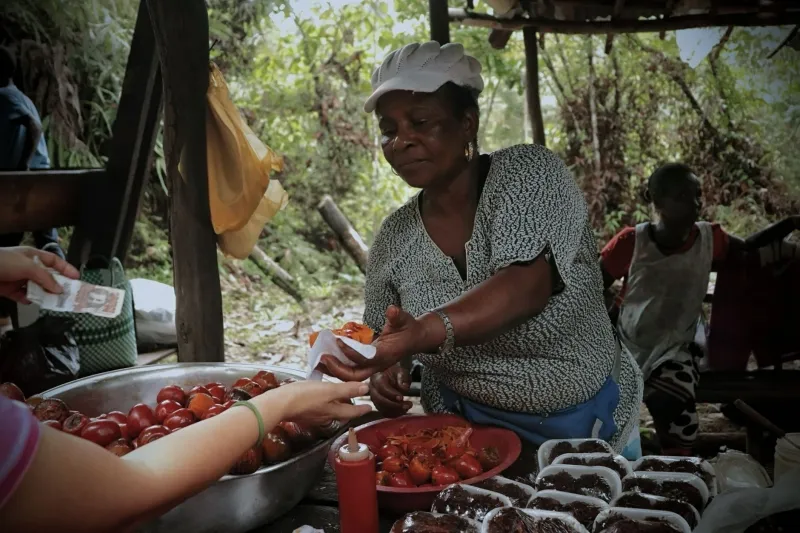
Some of the most transformative travel moments cost money. Not a fortune, but something. Saying yes to the cooking class. Hiring the boat captain for an extra hour. Buying the handmade thing from the person who made it at a price that reflects their actual labor.
Finding the Balance That Doesn't Cost You the Trip
None of this is an argument for spending recklessly or pretending that travel budgets aren't real. They are. Not everyone has the luxury of splurging, and accessible travel matters.
But there's a difference between traveling affordably and traveling in a way that extracts maximum value from every interaction while minimizing what flows back.
A few things that actually help:
Spend locally where it counts. You don't have to stay at the boutique hotel, but try to eat at locally owned spots, hire guides from the community, and buy things directly from the people who made them.
Ask why something is cheap. Not every low price is a red flag, but some are. Understanding the economics behind a deal helps you make better choices.
Build a little flex into the budget. Even $20 or $30 of discretionary money per day changes the experience. It means you can say yes to things that matter without blowing the whole trip.
Travel in shoulder season when you can. You often get most of the off-season price benefits without the fully shuttered economy problem.
The best trips aren't the ones where you spent the least. They're the ones where the exchange felt fair — where you came away with something real, and the place you visited did too.
That's a deal worth making.