Whose Trip Is This, Anyway? Breaking Free From Other People's Itineraries
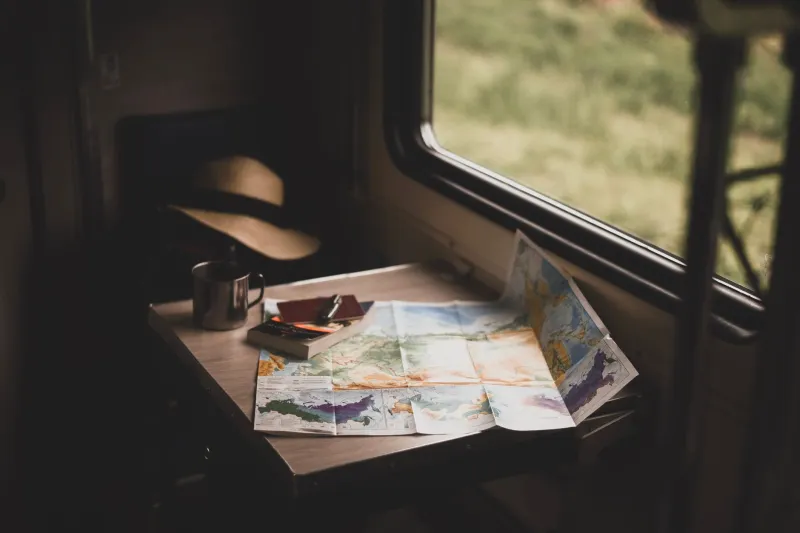
There's a particular kind of disappointment that hits when you finally arrive at a place you've been dreaming about for months — and it feels weirdly familiar. You've seen it in a hundred photos. You know exactly where to stand for the shot. You've read which café to visit afterward and what to order when you get there. And somehow, standing in the middle of it all, you feel like you're following a script someone else wrote.
That's the guidebook trap. And more American travelers are falling into it than ever.
The Problem With "Must-See" Thinking
Travel content has never been more abundant. Between Rick Steves, Lonely Planet, Condé Nast Traveler, and approximately 4,000 Instagram accounts dedicated to "hidden gems" (that are no longer hidden), there is no shortage of people telling you where to go, what to eat, and how long to spend at each stop. The result is a kind of itinerary monoculture — thousands of travelers moving through the same cities, ticking the same boxes, eating at the same three restaurants that made some list in 2019.
Travelers who've noticed this pattern describe it the same way: efficient, comfortable, and strangely hollow.
Jenna Calloway, a teacher from Asheville, North Carolina, spent two weeks in Italy last spring following a meticulously researched 14-day plan she'd pulled from a popular travel blog. "Every day was optimized," she says. "I hit every major site. I got the photos. But by day eight, I realized I hadn't made a single spontaneous decision. I hadn't wandered anywhere. I was just executing someone else's agenda."
What Jenna experienced isn't unusual. It's a predictable outcome of what happens when we outsource our curiosity.
The Illusion of the "Unmissable"
Guidebooks — and their digital descendants — are built around a concept of consensus. Editors, writers, and algorithms identify what the most people found most impressive and package that into a ranked list. The logic makes sense on paper: if thousands of visitors loved the Uffizi Gallery or the Grand Canyon South Rim or the French Quarter, those places are probably worth seeing.
But "worth seeing" isn't the same as "worth seeing for you." And the aggregation of other people's preferences has a way of flattening the actual experience of a place into something generic.
Marco, a freelance photographer from Portland who travels several months a year, puts it bluntly: "The 'top ten things to do' list is designed for the average traveler. But you're not average. Nobody actually is. The moment you start treating someone else's highlight reel as your to-do list, you've already lost the plot."
He's got a point. Travel is deeply personal. What moves one person to tears bores another to sleep. The traveler obsessed with street food has no business spending three hours in a sculpture museum just because every guide says it's essential. The architecture nerd might find a back-alley neighborhood of crumbling 19th-century buildings more thrilling than any famous landmark.
When we don't ask ourselves what we actually want from a trip, we default to what we've been told to want.
What Gets Lost in the Shuffle
Here's the quiet cost of following the crowd: you don't just miss out on different experiences — you miss out on your experiences. The coffee shop you stumbled into because you got turned around. The neighborhood market that wasn't in any guide but smelled incredible and had a vendor who spent twenty minutes teaching you how to pick a good mango. The afternoon you accidentally spent watching locals play chess in a park because you sat down to rest your feet and couldn't bring yourself to leave.
None of that is in the guidebook. None of it ever could be.
Travelers who've deliberately stepped off the prescribed path consistently report that their most vivid memories come from unplanned moments — not from successfully locating the famous viewpoint at golden hour.
Dana Reyes, who took a solo road trip through the American Southwest last fall, described scrapping her original itinerary after the first two days. "I'd planned this whole route based on what I'd read online. But I kept driving past things that looked interesting and not stopping because I needed to stay on schedule. Finally, I just pulled over, deleted the itinerary from my phone, and drove wherever I felt like. It was the best decision I made the whole trip."
How to Build a Trip That's Actually Yours
None of this means guidebooks are useless. They're great for logistics — visa requirements, transportation options, neighborhood safety, general orientation. The mistake is treating them as the creative blueprint for your experience rather than a practical reference tool.
Here's a different approach:
Start with your actual interests, not a destination's greatest hits. Before you open a single travel guide, write down what genuinely excites you. Food culture? Street art? Hiking? Local music scenes? Architecture? Markets? Whatever it is, let that be the organizing principle of your trip rather than a list of "top attractions."
Leave real gaps in your schedule. Not every hour needs to be accounted for. Build in full half-days with no plan — just a neighborhood you want to explore and the freedom to see what happens. Some of your best travel memories will come from those windows.
Use guidebooks as a menu, not a mandate. Read them for ideas and context, but don't feel obligated to visit everything they flag as essential. Choose the things that actually sound good to you and skip the rest without guilt.
Ask locals, not algorithms. The restaurant recommendation that comes from your Airbnb host, your hotel's front desk staff, or the person behind you in line at the grocery store will almost always beat the third result on a travel blog. People who live somewhere know it in ways no content creator ever will.
Let yourself be bored occasionally. Boredom in travel is underrated. It creates space for curiosity to kick in. When you're not rushing to the next optimized attraction, you start noticing things. That noticing is where real travel lives.
The Trip That's Worth Remembering
There's nothing wrong with visiting the Louvre or the Grand Canyon or Times Square. Iconic places are iconic for a reason. But if your entire trip is built around checking off a consensus list, you're not really traveling — you're touring.
The trips that stay with you, the ones you're still talking about years later, are almost never the ones where everything went according to plan. They're the ones where something surprised you. Where you surprised yourself.
Your next trip doesn't need to look like anyone else's. It doesn't need to hit every landmark or follow any particular logic. It just needs to feel like yours.
That's the whole point.