That Snow Globe Won't Save the Memory: The Truth About What We Buy When We Travel
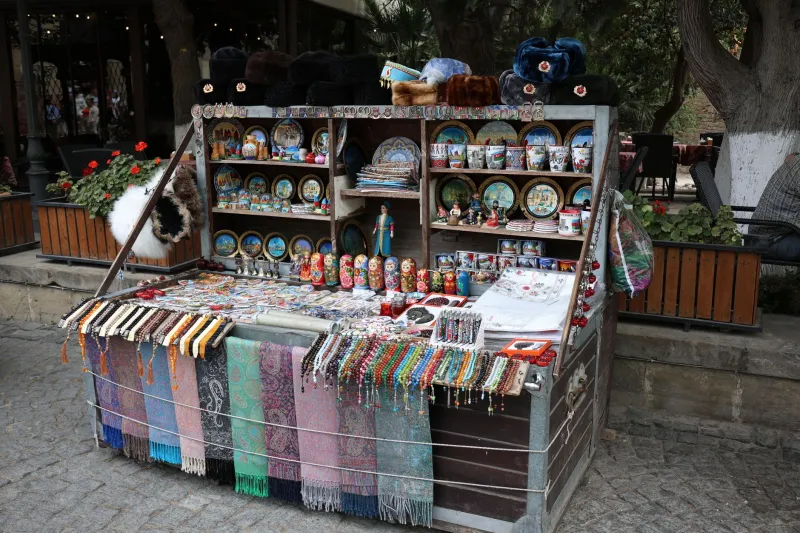
There's a particular kind of disappointment that hits somewhere around the six-month mark after a trip. You're cleaning out a drawer or reorganizing a shelf, and you find it — that thing you bought at the airport gift shop or grabbed from a vendor near the main square. You paid probably too much for it. You carried it carefully all the way home. And now you're holding it in your hand, staring at it, feeling absolutely nothing.
The magnet doesn't bring back the smell of the market. The miniature Eiffel Tower doesn't conjure the specific golden light of that afternoon. The hand-painted bowl looks nice enough, but it's just a bowl now.
So what happened?
The Gap Between the Moment and the Object
Here's the thing about souvenirs: we buy them in a heightened emotional state. You're somewhere new, your senses are firing on all cylinders, and you're trying desperately to hold onto whatever it is you're feeling. The object in front of you becomes a stand-in for the experience — a physical anchor you can carry home.
But the experience isn't transferable. It lived in your body, in the temperature of the air, in the conversation you were having, in the particular hunger or exhaustion or joy you felt at that exact moment. A painted plate from a Savannah gift shop can't carry any of that. It was never going to.
Psychologists who study memory and emotion have a term for what we're actually chasing: state-dependent memory. We remember things most vividly when we return to the same emotional or physical state we were in when the memory formed. A souvenir can sometimes trigger that — but only if it's genuinely tied to the experience, not just purchased nearby.
That's the crucial difference. And most tourist-shop merchandise fails that test completely.
Why the "Made in China" Magnet Doesn't Cut It
Let's be honest about what most souvenir shops are actually selling. It's not memory. It's convenience. The stuff near the entrance of every major tourist attraction in America — and honestly, the world — is designed to look like it belongs to a place while being manufactured somewhere entirely different at a fraction of the cost.
When you pick up a Grand Canyon snow globe or a generic "I ♥ Nashville" t-shirt, you're not buying a piece of a place. You're buying a symbol of a place. And symbols are thin. They flatten experience into logo.
Several travelers I've talked to described the same realization hitting them years after a trip. Maria, a teacher from Columbus, Ohio who traveled through Portugal in her late twenties, kept a ceramic rooster she'd bought at a Lisbon tourist market. "I thought it was so charming when I bought it," she told me. "But later I realized I remembered almost nothing about buying it. It was just... there. What I actually remember from that trip is a tiny restaurant where the owner kept bringing us food we didn't order. I have zero physical object from that night, but I think about it all the time."
That story is more common than people admit.
The Accidental Keepsake Problem
Here's where it gets interesting. Ask most well-traveled people about their most meaningful possessions from trips, and they almost never describe something they bought with the intention of it being a souvenir.
It's the wine cork from a vineyard in Napa where something funny happened. It's the folded cocktail napkin with directions scrawled on it by a stranger who turned into a three-hour conversation. It's a smooth stone picked up on a beach in Maine during a walk that ended in a moment of unexpected clarity.
These things work as memory anchors because they're from the experience, not purchased adjacent to it. They were touched by the actual moment. The object and the memory share a real origin point.
This is also why handmade items from local artisans — when they're genuinely that — tend to hold up better over time. Not because they're prettier or more expensive, but because the act of choosing them usually involves actual engagement. You talked to someone. You learned something. The object carries that context.
What Actually Preserves a Travel Memory
If you want to stop buying things that end up meaning nothing, it helps to get honest about what you're really after. Usually it's one of three things: a sensory trigger, a story anchor, or proof of presence. And there are better ways to get all three.
Sensory triggers work best when they're literal. A small bottle of a local hot sauce. A tea blend you found at a market. A specific scent. These engage the parts of your brain that are most directly wired to memory recall — smell especially. A jar of honey from a farm stand in Vermont will take you back to that drive through the fall foliage more reliably than any bumper sticker.
Story anchors are about the narrative, not the object. Some travelers keep a simple voice memo habit — just thirty seconds recorded on their phone at the end of each day, describing something specific that happened. Not a highlight reel. Just a real moment. Those recordings age extraordinarily well. Others write a single postcards to themselves, mailed home from wherever they are. Getting something physical in your own handwriting weeks after you're back is a surprisingly powerful experience.
Proof of presence is the trickiest one, because it's often really about ego — wanting evidence that you were somewhere meaningful. Social media has largely colonized this need, for better or worse. But if you're honest with yourself about that motivation, you can redirect it. A well-shot photograph — not a selfie in front of a landmark, but a real image of something that moved you — serves this purpose far better than any object.
A Different Way to Shop When You Travel
None of this means you should stop buying things when you travel. It just means buying differently.
Slow down the purchase. If something catches your eye in a shop, don't grab it immediately. Walk around, see the rest of the market, come back if you still want it. Impulse souvenir buying almost always leads to regret.
Ask where it came from. If a vendor can't tell you anything about how or where something was made, that's a signal. Not a dealbreaker, but a signal.
Buy for use, not display. Things you'll actually use — a piece of clothing, a kitchen item, a book — stay alive in your daily life in a way that shelf decorations don't. Every time you reach for that olive wood spoon from a market in Asheville, you'll briefly return there. That's the whole point.
And sometimes, buy nothing at all. Let the memory live where it actually lives: in you. You don't need an object to prove something happened. You were there. That's already enough.