You Can't Step Into the Same River Twice — Or the Same Trip
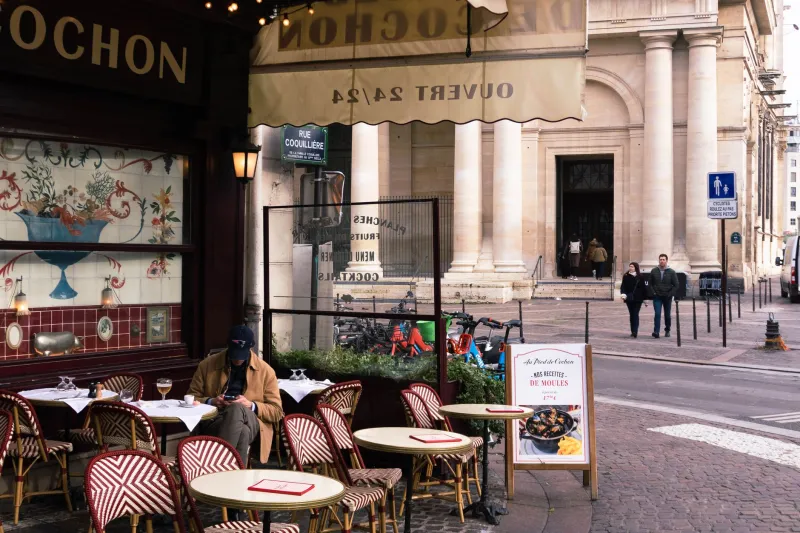
Sarah Chen still remembers the exact table. Corner seat, second floor, overlooking a narrow cobblestone street in Lisbon's Alfama district. She'd sat there for three hours on her first solo trip at 26, drinking mediocre wine and feeling, for the first time in her adult life, completely untethered from anyone's expectations. It was, she says, one of the best afternoons of her life.
She went back at 33.
"The table was still there," she told me. "The wine was probably the same. But I just sat there waiting to feel something, and mostly what I felt was... confused. Like I'd driven a long way to visit someone who'd moved."
Sarah isn't alone in this experience. Talk to enough travelers and you'll find a surprisingly consistent story: the return trip to a meaningful destination is rarely what anyone expected. Sometimes it's richer. Sometimes it's hollow. Almost always, it's complicated in ways that are hard to explain to people who weren't there the first time.
There's a name for what's happening, even if most of us don't have the vocabulary for it while we're standing in the middle of it.
The Place Didn't Change. You Did.
Here's the uncomfortable truth at the center of every return trip: destinations are far more static than we are. Yes, cities evolve. Restaurants close. Neighborhoods gentrify. But the fundamental character of a place — the light at a certain hour, the rhythm of the streets, the smell of the air — tends to hold steady in ways that human beings simply don't.
We change constantly, even when we're not paying attention. A trip that hit you like lightning at 24 carries a very specific charge because of who you were at 24 — what you were running from, what you were hungry for, how wide open you were to being surprised. Go back at 38 with a mortgage and a kid in middle school and a much clearer sense of what you want from a Tuesday, and you are bringing an entirely different receiver to the same signal.
The signal hasn't changed. You have.
Marcus Webb, a high school teacher from Portland, Oregon, described his return to a small surf town in Costa Rica as "meeting an old friend who became a stranger." He'd gone the first time after a rough breakup, knowing nobody, learning to surf badly, eating fish tacos alone at sunset and finding it genuinely healing. When he went back five years later with his now-wife, everything looked right but felt slightly off, like a song played in the wrong key.
"I kept trying to show her what made it special," he said. "But I realized I was describing something that only existed for a specific version of me that doesn't really exist anymore. That guy needed that trip. I'm not that guy."
Nostalgia Is a Liar — A Lovable One, But Still
Part of what makes return trips so disorienting is that nostalgia does us dirty on the front end. By the time we decide to go back somewhere, memory has already been editing the footage. The three-hour delay at the airport is gone. The food poisoning is softened into a funny story. What remains is a highlight reel, and we book flights trying to get back into the movie.
But memory isn't just selective — it's actively creative. Researchers have known for decades that we reconstruct memories each time we access them, layering in feelings and meanings that weren't necessarily present in the original experience. The magic you remember from your first trip to New Orleans or Tokyo or that tiny inn in Vermont may be real, but it's also partially a story you've been telling yourself for years, polished smooth by repetition.
Going back means testing that story against reality. Sometimes it holds up beautifully. Sometimes the gap between the memory and the place is wide enough to fall into.
Jamila Torres, a travel writer based in Atlanta, has made a practice of revisiting destinations intentionally — almost as a form of self-study. "I went back to Oaxaca for the third time last year," she said, "and it was the first time I went without any agenda around recapturing something. I just went to see what was there now, for who I am now. It was the best trip of the three."
The shift she describes — from chasing a memory to simply arriving present — seems to be the pivot point for travelers who find return trips genuinely rewarding rather than quietly disappointing.
When Going Back Reveals Something New
Not every return story is tinged with loss. Plenty of travelers find that revisiting a meaningful place unlocks something the first visit couldn't have, precisely because of how much they've changed.
Derek Okafor from Chicago went back to Cape Town a decade after his first visit, which had been a whirlwind two-week group tour. "The first time, I was checking boxes," he admitted. "Table Mountain, the waterfront, wine country — I did it all and barely absorbed any of it." When he returned as a slower, more intentional traveler, he spent a week in a single neighborhood, got to know a local family who ran a small guesthouse, and left feeling like he'd actually been somewhere.
"The first trip gave me the postcard," he said. "The second trip gave me the place."
This is the other side of the traveler's paradox: sometimes the version of you who shows up the second time is finally equipped to receive what the destination was always offering. The growth that happened between trips becomes the thing that unlocks the experience.
How to Go Back Without Chasing Ghosts
If you're planning a return trip to somewhere that mattered to you, a few honest questions are worth sitting with before you book.
What are you actually hoping to find? If the honest answer is "the feeling I had at 22," that's worth examining. That feeling belonged to a specific moment in your life. The place can't give it back, and that's not the place's fault.
Are you going back for you, or for someone else? Trying to share a meaningful destination with a partner or friend who wasn't there the first time puts enormous pressure on both the trip and the relationship. You're inevitably translating an experience that may not translate.
Can you hold it lightly? The travelers who seem to navigate return trips best are the ones who go with open hands rather than clenched fists — curious about what they'll find rather than insistent on finding what they remember.
Sarah, the woman from the Lisbon corner table, went back a third time last year. She didn't look for the table. She wandered neighborhoods she'd never visited, ate at places she found by accident, and let the city be new to her again.
"It was the best Lisbon trip I've had," she said. "Because I stopped trying to make it the first one."
Maybe that's the whole lesson. You can go back to a place. You just can't go back to who you were when you first found it. And honestly? That's not a loss. That's just proof that the first trip actually worked.