Packed Bags, Unfiltered Truth: What a Week of Travel Really Does to a Friendship
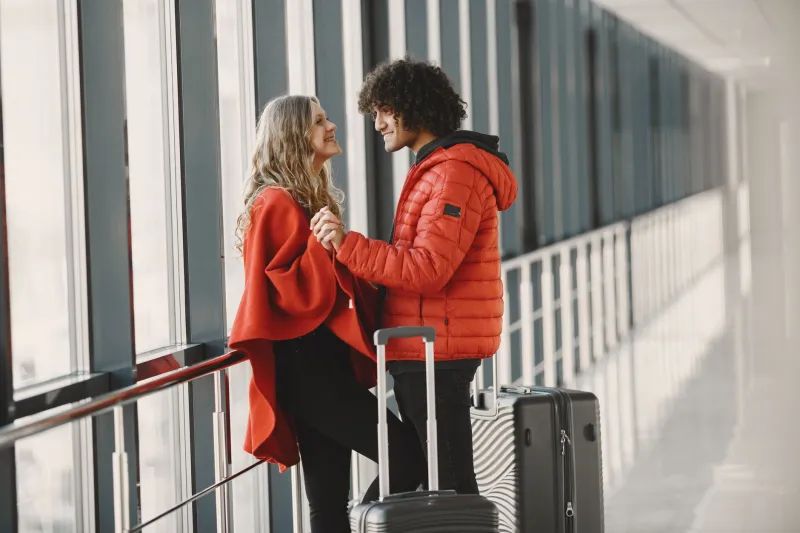
You've probably heard it before — travel changes you. But here's the part nobody warns you about: it changes your friendships too. Not always for the worse, but almost always in ways you didn't expect.
There's something about sharing a cramped hotel room, navigating a foreign subway system on three hours of sleep, and splitting a check in a currency neither of you fully understands that strips away every polished version of a person. What you're left with is the real one.
And sometimes? That's the best thing that could've happened.
The Honeymoon Phase (Yes, Trips Have One Too)
Most travel friendships start strong. The first 24 hours are golden — you're both riding the high of being somewhere new, taking photos of everything, laughing about the chaotic airport experience you just survived together. It feels like the beginning of a great story.
But by day three, the shine starts to wear off. Someone's tired. Someone wants to spend the afternoon at a museum the other person finds painfully boring. Someone needs to eat right now and the other one just wants to find the perfect spot.
This is where things get interesting.
Psychologists who study interpersonal compatibility often point to what's called "conflict tolerance" — the ability to sit with tension without letting it blow up into something bigger. Travel accelerates this. You're making dozens of micro-decisions a day together, in unfamiliar environments, often without enough sleep or food. If there's a crack in a friendship's foundation, a week on the road will find it.
The Friends Who Actually Thrive
So which friendships survive — and more importantly, which ones come out better?
From everything I've seen and experienced, the pairs who do well tend to share a few key traits. They're honest communicators. They're flexible. And critically, they actually talk about what they want from a trip before they leave.
I once traveled with a college friend I'd known for almost a decade. We'd always gotten along great at backyard barbecues and group dinners. But I had no idea she was a 6 a.m. riser who wanted to hit every major landmark by noon. I'm a slow-morning person who'd rather wander off-map than follow a schedule. We had a real conversation about it on day two — slightly uncomfortable, totally necessary — and we figured out a rhythm that worked. That trip is now one of my favorite travel memories, and she's one of the people I'd book a flight with again without hesitation.
The key wasn't that we were perfectly compatible. It's that we were willing to be honest when we weren't.
The Friendships That Don't Make It Back
On the flip side, I've also watched friendships quietly fracture mid-trip and never fully reassemble.
It usually isn't one big blowup. It's the accumulation of small things — the friend who always lets you handle logistics but never says thank you, the travel partner who disappears into their phone for hours and then wonders why you seem distant, the person who agreed to split costs evenly but suddenly has opinions about every single expense. Little frictions that, at home, you'd never notice because you only see each other for a few hours at a time.
Travel removes that buffer. You're together almost constantly, sharing physical space, making decisions, managing stress. And if one person consistently prioritizes their own comfort over the shared experience, it becomes hard to unsee.
This isn't about blame. Sometimes people are just incompatible travel partners even when they're great friends in their regular lives. That's a legitimate discovery — and it doesn't have to mean the end of anything, as long as both people can acknowledge it.
What the Research (and Real Life) Suggests
There's actually some solid psychology behind why travel is such a friendship accelerator. Studies on relationship bonding consistently show that shared novel experiences — especially ones that involve a degree of challenge or uncertainty — deepen emotional connection faster than routine social interactions. In other words, surviving a missed connection in Atlanta together or getting completely lost in a city where neither of you speaks the language creates a kind of intimacy that years of brunch dates simply can't replicate.
But the same research also shows that stress amplifies existing personality traits. Someone who's a little controlling at home becomes very controlling when there's a missed tour bus involved. Someone who tends to withdraw when overwhelmed will really withdraw when they're exhausted and overstimulated in a foreign city.
Travel doesn't create these qualities. It just turns up the volume.
Before You Book: A Few Honest Questions Worth Asking
If you're planning a trip with a friend and you actually want the friendship to survive it, it helps to get a few things on the table early:
- What's your travel style? Early riser or slow mornings? Jam-packed itinerary or spontaneous wandering? Knowing this upfront prevents a lot of low-grade resentment.
- What's your budget reality? Money is the most common source of travel friction. Be honest about what you can and can't spend.
- Do you need alone time? Some people recharge by having a few hours to themselves, even mid-trip. There's nothing wrong with splitting up for an afternoon — in fact, it often saves the whole trip.
- How do you handle conflict? This one's harder to ask, but worth thinking about. If something goes sideways, do you address it or let it simmer?
None of this is about vetting your friends like a job interview. It's just about going in with eyes open.
The Trips That Bond You for Life
Here's the thing nobody talks about enough: when a travel friendship does work, it creates something almost impossible to replicate. You've seen each other at your least polished. You've navigated real stress together. You've laughed at things that probably weren't that funny but felt hilarious at 1 a.m. after a long day.
That shared history becomes part of the friendship's identity. It's shorthand. It's inside jokes. It's the kind of story that comes up at every gathering for years.
The road has a way of revealing who people really are — and sometimes, what it reveals is that the friend you thought you knew is even better than you realized. That's the version of this story worth chasing.