Forget the Feed: Why More Americans Are Trading Viral Views for Real Places Nobody's Heard Of
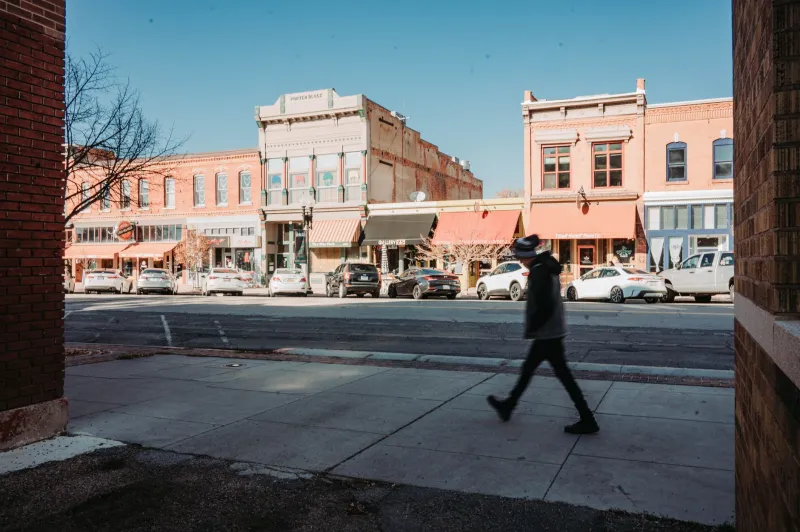
There's a town in rural Kentucky called Berea that most Americans couldn't find on a map. It has no major landmarks, no viral hashtag, and no influencer has ever built a Reel around its main street. But ask Rachel Nguyen, a 34-year-old teacher from Columbus, Ohio, why she spent a long weekend there last fall, and she'll talk your ear off for twenty minutes.
"I ate at a diner where the owner came out and sat with us," she says. "We talked for two hours. I learned things about Appalachian craft traditions I never would have Googled. That conversation changed how I think about American history."
Rachel isn't alone. Across the country, a quiet but growing crowd of travelers is making a deliberate choice to sidestep the places that flood their social media feeds — Antelope Canyon, the lavender fields of Sequim, the neon-soaked corners of Nashville's Broadway — in favor of destinations that offer something harder to photograph but easier to feel.
The Overtourism Hangover Is Real
It didn't happen overnight. For years, travel culture ran on a simple engine: someone posted a stunning photo, thousands of people wanted to replicate it, and suddenly a sleepy coastal town or a tucked-away canyon was dealing with parking nightmares, litter problems, and locals who couldn't afford rent anymore.
The Amalfi Coast. Iceland's Fjaðrárgljúfur canyon. Even domestically — Horseshoe Bend in Arizona now requires timed entry permits because the crowds became genuinely dangerous. These aren't isolated incidents. They're symptoms of what happens when travel is optimized for content rather than experience.
Dr. Jenna Foley, a behavioral psychologist at the University of Michigan who studies leisure and identity, puts it plainly: "When people travel to recreate an image they've already seen, the trip is essentially over before it starts. The brain isn't encountering anything new — it's confirming something familiar. That's the opposite of what makes travel psychologically rewarding."
The dopamine hit of the perfect shot, she argues, is a short-circuit. The deeper satisfaction that comes from genuine discovery — from being confused, surprised, or moved by something you didn't expect — requires a different kind of travel entirely.
Talking to the Converts
Marco Delgado, a 41-year-old software engineer from Austin, used to plan trips around bucket lists. Zion. Yellowstone. The Great Smoky Mountains. "I did all of them," he says without much enthusiasm. "They're beautiful. I also spent half my time waiting in lines and the other half trying to get a clean shot without someone else's elbow in it."
Two years ago, a friend suggested they road-trip through the Mississippi Delta instead. No national parks, no Instagram strategy, just small towns and back roads through one of the most historically rich corridors in the United States.
"We stopped in Clarksdale and ended up at a blues club with maybe thirty people in it," Marco recalls. "The musician playing knew the history of every song. He talked to us after. We ended up staying an extra day. I've never done that anywhere else."
That's the texture that Instagram-famous destinations often can't provide: the unscripted moment, the conversation that goes sideways in the best possible way, the meal at a place with no Yelp reviews that turns out to be the best thing you've eaten all year.
The Psychology of 'Real Journey' Travel
There's a term researchers use: novelty-seeking behavior. Humans are hardwired to crave new experiences, but the travel industry has gradually trained us to seek novelty in increasingly predictable packages. When every destination looks the same on a phone screen, the novelty is mostly aesthetic — it's the light, the angle, the filter.
Authentic travel, by contrast, tends to involve what psychologists call cognitive dissonance — moments where your expectations and reality don't line up. It's uncomfortable. It's also where real growth happens.
"The unglamorous trip is often the most transformative one," says Dr. Foley. "A crumbling small-town diner, a conversation with someone whose life looks nothing like yours, getting genuinely lost — those experiences build empathy and self-awareness in ways that a perfectly curated itinerary simply can't."
Practical Strategies for Finding the Real Thing
So how do you actually find these places without a tourism board handing you a press kit? A few approaches that seasoned off-grid travelers swear by:
Start with county fairs and local events. State tourism sites won't highlight them, but local event calendars — especially on small-town Facebook groups and community websites — are gold mines. A county fair in rural Iowa or a bluegrass festival in western North Carolina will put you in a room full of locals who have zero interest in performing for tourists.
Use old travel writing. Guidebooks from the '80s and '90s describe places before they were discovered. Many of those spots still exist, just without the crowds.
Ask at independent hardware stores. Sounds odd, but hardware stores in small towns are community hubs. The people there will tell you where locals actually eat, drink, and spend their weekends — and they'll find it genuinely funny that you're asking.
Follow regional newspapers, not travel blogs. The Paducah Sun or the Bend Bulletin will tell you what's actually happening in a place. Travel blogs, however well-intentioned, tend to recycle the same curated highlights.
Say yes to the detour. The best moments in travel almost always come from the unplanned pivot — the road that looked interesting, the hand-painted sign for a roadside museum, the stranger who said "you should really see..."
The Trade-Off Worth Making
Here's the honest part: off-the-beaten-path travel isn't always comfortable. The accommodations might be average. The town might not have a great coffee shop. You might spend a morning genuinely unsure what to do with yourself.
But Rachel, Marco, and dozens of other travelers we spoke with said the same thing in different ways: the trips they remember most aren't the ones with the best photos. They're the ones where something real happened.
Travel has always been, at its core, about encountering the world as it actually is — not as it's been staged for consumption. The feed will always be there. The diner owner who sits down and changes how you see American history? That's a one-time offer.
Maybe the most radical travel choice you can make right now is simply to put the phone in your pocket and walk somewhere nobody told you to go.