Alone on the Road, Never Alone in the World: The Hidden Gift of Solo Travel
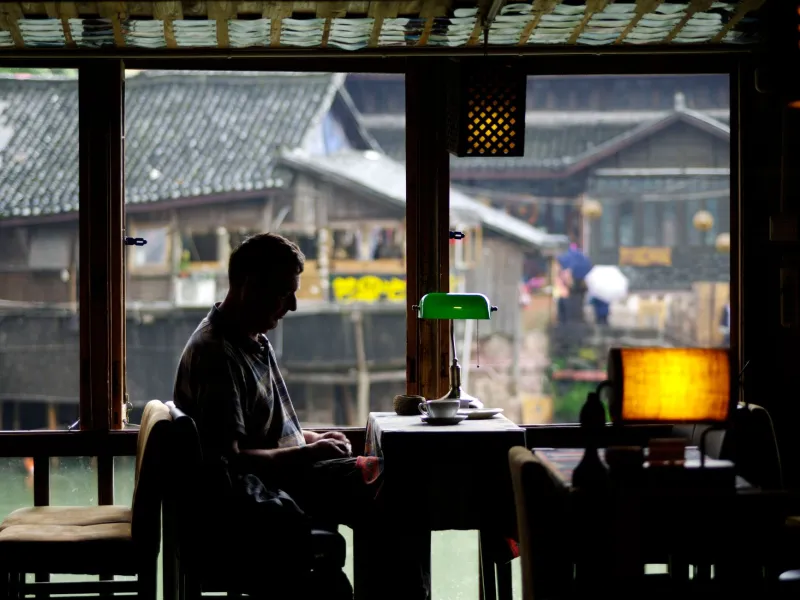
There's a moment that almost every solo traveler knows. You're sitting at a small table in a restaurant you found by wandering down the wrong street, you don't speak the language, and you've just ordered something you can't quite identify. And somehow—inexplicably—you feel completely, utterly at peace.
It makes no logical sense. You're alone in an unfamiliar city, probably a little lost, and yet something inside you is humming. That's the paradox nobody warns you about before your first solo trip: being alone out there often makes you feel more connected than you ever do at home, surrounded by people you've known for years.
Why Your Usual Social Circle Can Actually Isolate You
Here's the thing about traveling with friends or family—it's comfortable, and comfort has a way of shrinking your world. When you've got your people around you, you default to inside jokes, familiar dynamics, and the kind of conversation you could have back home on the couch. You move through a new place filtered through a group lens, rarely pausing long enough for the destination to actually reach you.
Solo travel strips all of that away. Without a built-in buffer, you become genuinely available—to the city, to strangers, to yourself. You notice things. You linger. You say yes to the random suggestion from the hostel desk clerk because there's no one in your group who'd rather do something else.
Marcus, a 34-year-old graphic designer from Austin, Texas, put it simply after his first solo trip to Portugal: "I've traveled with friends a dozen times, and I love it. But traveling alone was the first time I actually talked to people I didn't already know. Like, really talked. I had a two-hour conversation with a retired fisherman in Setúbal who didn't speak much English, and we figured it out. That never would've happened if I'd had my buddies with me."
The Stranger Effect: Why Random Connections Hit Differently
There's actual psychology behind why brief encounters with strangers on the road feel so meaningful. Researchers call it "transient sociality"—the idea that connections unburdened by history or expectation carry their own kind of intimacy. You're not performing a version of yourself shaped by years of relationship dynamics. You're just... you, right now, in this moment.
For solo travelers, these micro-connections stack up fast. The woman on the train from Chicago to New Orleans who shares her homemade biscuits and tells you about her grandmother's house. The surfer at a hostel in San Diego who draws you a hand-sketched map of a beach that doesn't show up on Google. The elderly couple in a small New Mexico diner who insist you try the green chile and end up telling you about the town's history for forty-five minutes.
None of these people will likely become lifelong friends. But each encounter leaves a mark—a little deposit of human warmth that accumulates into something that feels, oddly, like belonging.
Jessica, a 28-year-old nurse from Nashville who took a solo road trip through the Pacific Northwest last fall, described it this way: "I cried twice on that trip. Once because I was overwhelmed and lonely in a way I didn't expect. And once because a total stranger at a campsite in Olympic National Park sat with me for two hours and we talked about everything—grief, dreams, favorite books. I'll probably never see her again, but that conversation changed something in me."
Getting Honest With Yourself (Ready or Not)
Here's the part nobody puts in the Instagram caption: solo travel is also deeply uncomfortable, especially at first. There's no one to help you decide, no one to blame when things go sideways, and no one to distract you from your own thoughts. That sounds rough—and sometimes it is.
But that discomfort is also the whole point.
When you're navigating a missed bus in a city where you don't know anyone, or eating dinner alone at a table set for two, or sitting with a sunset that's almost too beautiful to process without someone to share it with—you learn things about yourself that couch life simply won't teach you. You find out how resourceful you are, how adaptable, how capable of sitting with your own company without reaching for your phone every thirty seconds.
Many solo travelers describe coming home with a clearer sense of what they actually want from their lives, their relationships, even their careers. The distance from routine creates space for honest reflection that's hard to manufacture any other way.
First-Timer Tips: How to Make the Most of Going Solo
Start somewhere with a built-in social scene. Hostels, group tours, cooking classes, and local meetups are great equalizers. You don't have to engineer every connection—just put yourself in rooms where they can happen naturally. Cities like New Orleans, Asheville, and Portland are especially welcoming to solo travelers.
Eat at the bar. Seriously. Sitting at a restaurant bar solo is one of the oldest solo travel hacks in the book. Bartenders talk. So do the people next to you. It's infinitely less lonely than a corner table, and you'll almost always end up with a restaurant recommendation you'd never have found on Yelp.
Give yourself permission to be bored. Resist the urge to fill every moment. Some of the best solo travel experiences come from wandering without a plan, sitting in a park and watching people, or spending an afternoon in a bookshop. Boredom, it turns out, is just opportunity in disguise.
Check in with someone back home—but not constantly. A quick daily text to a friend or family member keeps you grounded and safe without pulling you out of the experience. Constant group chats, though, are the enemy of presence.
Trust the discomfort. The moments that feel hardest—the lonely dinners, the navigational disasters, the nights when you really wish someone was there—are often the ones you'll remember most clearly and be most grateful for later.
The Takeaway
Solo travel isn't about being a lone wolf or proving something to anyone. It's about creating the conditions for a different kind of experience—one where you're fully available to the world and to yourself in a way that's nearly impossible to replicate in any other context.
You'll meet people who surprise you. You'll surprise yourself. And you'll come home—maybe a little tired, maybe a little changed—feeling more connected than when you left. Not despite having gone alone, but because of it.