Your Travel Journal Is Broken — Here's How to Actually Fix It
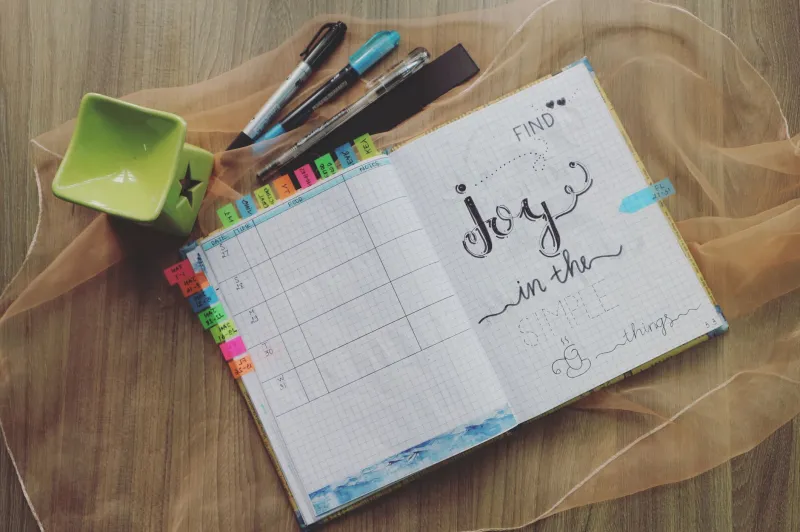
Somewhere in your house, there's probably a notebook. Maybe it's a nice one—a Moleskine you bought specifically for that trip to Colorado or that long weekend in Savannah. You wrote in it the first day, maybe the second. Then life got busy and interesting and the notebook got shoved into a bag pocket and that was that.
Or maybe you're a digital person, and your version of travel documentation is a camera roll so bloated with near-identical sunset photos that you can't actually find the one picture you want to show someone.
Either way, you're not alone. And either way, you're probably not capturing the part of travel that actually matters.
The Problem With How We Think About Travel Memories
Most of us approach travel documentation like we're building evidence—proof that we were there, that it was beautiful, that it happened. Photos, check-ins, maybe a few diary entries that read more like a schedule recap than an actual human experience.
But here's the thing: the stuff that stays with you from a great trip is almost never the view from the top of the mountain. It's the smell of the food market the morning you woke up early by accident. It's the specific quality of light on a particular afternoon. It's the weird, funny, unexpected moment that made you laugh until you couldn't breathe. That's the stuff worth catching—and it almost never fits neatly into a photo or a bullet-point summary.
The goal of a real travel journal isn't documentation. It's translation. You're trying to translate an experience into something that will actually transport you back there when you read it five years from now.
Try Sensory Snapshots Instead of Summaries
One of the most effective—and underused—journaling techniques is what some writers call a sensory snapshot. Instead of recapping what you did, you describe a single moment in as much sensory detail as you can manage: what you heard, smelled, felt, tasted, and saw. Not the whole day. Just one moment.
For example, instead of writing "Visited the French Market in New Orleans, very crowded, bought some hot sauce," you might write: "The French Market smelled like chicory coffee and something faintly sweet and rotting in the heat. A brass band was playing two stalls over, and the sound kept cutting in and out as people moved between us. The hot sauce bottle was sticky from the vendor's hands and mine both."
Same moment. Completely different experience of reading it back.
These snapshots take five minutes, and they'll do more to preserve a place in your memory than a hundred photos ever could.
Voice Memos: The Underrated Tool in Your Pocket
Nobody talks about voice memos as a travel journaling tool, but they should. When you're in the middle of something—walking through a busy street market in Charleston, sitting on a beach in the Outer Banks—pulling out your phone to type is clunky and pulls you out of the moment. But hitting record and just talking? That's fast, natural, and captures something written notes almost never do: your actual voice, your tone, the ambient sound of the place around you.
These don't need to be polished. In fact, the messier and more in-the-moment, the better. Ramble. Say "I don't know why, but this place makes me feel..." and see what comes out. You can always transcribe the good parts later, or just listen back on a gray Tuesday in February when you need a reminder that the world is big and worth exploring.
Sketching: You Don't Have to Be Good at It
Here's a permission slip: your travel sketches do not need to be good. They don't need to look like the place. They just need to be yours.
Sketching slows you down in a way that photography doesn't. When you draw something—even badly, even with a ballpoint pen in the margin of a receipt—you spend time with it. You notice the way the doorframe is slightly crooked, or how the fountain in the town square has a chip out of one side. You look at things longer and differently than you ever would with a camera.
A lot of travelers who try sketching for the first time are surprised by how much they remember from a scene they drew versus one they photographed. The act of drawing encodes the memory differently. Pair your sketch with a single sentence about what you were feeling when you made it, and you've got something genuinely irreplaceable.
Collect Things That Carry Context
A pressed flower from a hiking trail in Sedona. A transit ticket from a subway system you figured out by yourself. A sugar packet from the diner where you had the best pie of your life. A torn corner of a map that someone drew on to give you directions.
Physical artifacts carry emotional weight in a way that digital files simply don't. Tape them into a journal, write a sentence next to each one about where it came from, and you've built something that feels less like a scrapbook and more like a portal.
The key is to collect intentionally rather than compulsively. One or two meaningful objects per trip beats a bag full of random stuff you'll feel guilty about throwing away later.
Talk to Someone and Write It Down
One of the most overlooked forms of travel documentation is the informal interview. Not a formal thing—just asking someone local a question and actually writing down what they say.
"What's something about this town that visitors almost never know?" or "What's your favorite place to eat that's not on any tourist list?" or even just "What's it like living here?"
The answers will surprise you. And reading them back later gives you a window into a place that no guidebook or travel blog (yes, even this one) can fully replicate. It's the human layer of a destination, preserved in someone else's actual words.
Bringing It All Together
You don't need to do all of this. Honestly, pick one or two approaches that feel natural and stick with them. The goal isn't a perfect artifact—it's a genuine one.
The best travel journal isn't the prettiest or the most thorough. It's the one that, when you crack it open years later, actually takes you somewhere. That's the whole point of keeping it in the first place.
So next time you're on a weekend trip to the Smoky Mountains or a longer adventure somewhere you've never been, try skipping the posed photo for five minutes. Sit down. Close your eyes. Open them. Write down what you smell.