Welcome Back to Weirdness: The Real Shock of Coming Home After Long-Term Travel
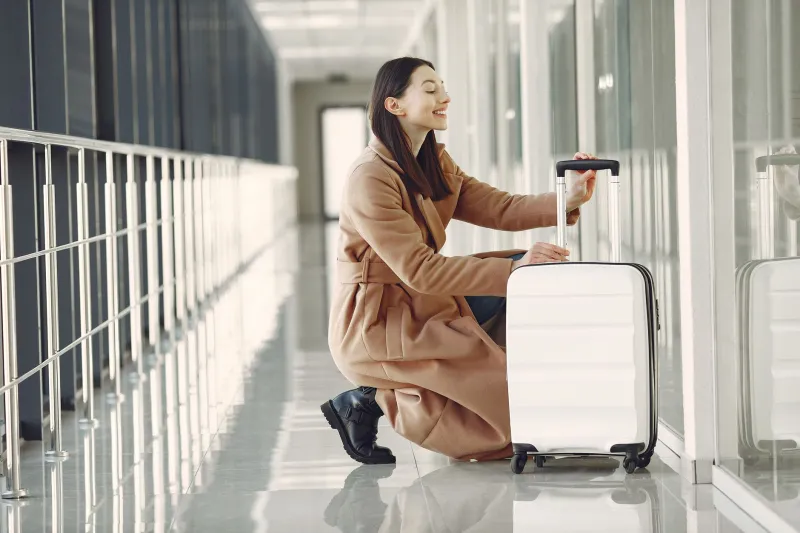
You're back. Bags dropped in the hallway, passport still warm in your pocket. People keep asking if it's good to be home, and you're nodding along because that's what you're supposed to do. But somewhere between the airport Cinnabon smell and your first trip to the grocery store, something feels deeply, inexplicably off.
This isn't the emotional grief of leaving a place you loved — that's a whole other conversation. This is something more disorienting and harder to explain: the sensory, practical, almost physical experience of re-entering American life after extended time away. The lights are too bright. The portions are enormous. Everyone is talking loudly, moving fast, and staring at their phones. And somehow, you're the one who feels like the foreigner.
Welcome to reverse culture shock. It's real, it's underreported, and more long-term travelers experience it than most would ever admit.
Why Familiar Things Start Feeling Strange
Here's the thing about culture shock in a foreign country — you expect it. You've mentally prepared for the language barrier, the different food, the unfamiliar customs. Your brain is already in adjustment mode.
But coming home? Your brain assumes it already knows everything. There's no prep mode activated. So when reality doesn't quite match the version of home your memory had quietly preserved, the dissonance hits harder than it would anywhere else.
Travelers coming back from Southeast Asia often describe American grocery stores as overwhelming to the point of anxiety — not because they've never shopped there before, but because forty-seven varieties of salad dressing genuinely seems absurd after months of simpler living. People returning from extended time in Europe frequently report that driving everywhere again feels isolating and weirdly exhausting. Those who've spent time in places with slower, more communal cultures sometimes find American small talk hollow in a way they never noticed before they left.
None of this means home is bad. It just means you changed — and home stayed the same.
The Sensory Overload Nobody Mentions
Before we get philosophical, let's talk about the purely physical stuff, because it's real and it's jarring.
American life runs loud. The TVs in restaurants, the highway noise, the HVAC hum of big-box stores — it's a specific kind of ambient chaos that you stop noticing when you live inside it. Spend several months in quieter environments and your nervous system recalibrates. Coming back can feel like someone turned up a dial you didn't know existed.
Then there's the scale of everything. American cars, American roads, American meal portions — after living in places where things are built more compactly, the sheer physical size of daily American life can feel almost cartoonish. One traveler who spent eight months in Japan described her first drive down a suburban strip mall corridor as "genuinely surreal, like a movie set."
And the pace. American productivity culture moves fast and expects you to keep up. If you've been somewhere that operates on a slower social rhythm — afternoon rest periods, long meals, no particular urgency — snapping back into the hustle can feel less like returning home and more like being shoved into traffic.
How Long Does Readjustment Actually Take?
Honest answer: it varies wildly, and most people underestimate it.
For shorter trips — two to four weeks abroad — most travelers find their footing within a few days. The jet lag fades, the rhythms return, and life picks up more or less where it left off.
For longer trips — three months or more — the timeline stretches considerably. Researchers who study cross-cultural reintegration generally suggest that meaningful readjustment after extended time abroad takes anywhere from one to three months. That's not "feeling totally normal" — that's just the point where daily friction starts to ease.
What makes it longer: if you were living abroad rather than just vacationing. If you developed deep routines in another place. If the culture you were immersed in was significantly different from American culture in terms of pace, values, or social norms.
What makes it shorter: staying connected to people back home during your travels, having a structured routine to return to, and — maybe most importantly — giving yourself permission to feel weird about it instead of pushing through.
Strategies That Actually Help
The worst thing you can do is pretend it isn't happening. Travelers who try to white-knuckle their way back to normal often find themselves months later still feeling vaguely unmoored, unable to pinpoint why.
Give yourself a decompression window. If you can manage it, don't schedule your return for a Monday morning with work starting Tuesday. Give yourself even a long weekend to just exist at home without obligations. Let the strangeness be there without immediately burying it under a to-do list.
Find people who get it. Trying to explain reverse culture shock to someone who's never left for longer than a beach week is a recipe for frustration. Seek out other long-term travelers — in person or online — who can nod along when you say that the cereal aisle made you want to cry. It sounds dramatic until you've experienced it.
Keep one thread from where you were. This doesn't mean refusing to readjust. It means picking one small ritual from your time abroad and letting it live in your regular life for a while. A tea you got used to drinking, a slower morning routine, a habit of walking instead of driving when distance allows. It gives your transformed self somewhere to exist while the rest of you catches up.
Resist the urge to narrate constantly. There's a version of reverse culture shock that turns into endless comparison — "back in Thailand" this, "when I was in Portugal" that. It's natural, but it can alienate the people around you and trap you in a before/after mindset that makes readjustment harder. Process it, but find balance.
Journal the strangeness. Not for anyone else — just for you. Writing down the specific, weird, sensory details of feeling like a stranger in your own hometown is both cathartic and genuinely useful. It helps your brain process the gap between who you were when you left and who you are now.
The Part Worth Sitting With
Here's the reframe that takes a while to arrive at, but matters when it does: feeling like a foreigner in your own life isn't a sign that something went wrong. It's a sign that something went right.
Travel that actually changes you is supposed to leave a mark. If you came back exactly the same, with everything slotting seamlessly back into place, you probably didn't go deep enough.
The disorientation of re-entry is just the gap between who you were and who you became. It's uncomfortable, sure. But it's also evidence. Evidence that you went somewhere real, paid attention, and let it matter.
Home will stop feeling foreign eventually. And when it does, you'll carry a little bit of everywhere else with you — quietly, permanently, in the way you move through the world.