How the Algorithm Killed Discovery (And Where Real Travelers Are Looking Instead)
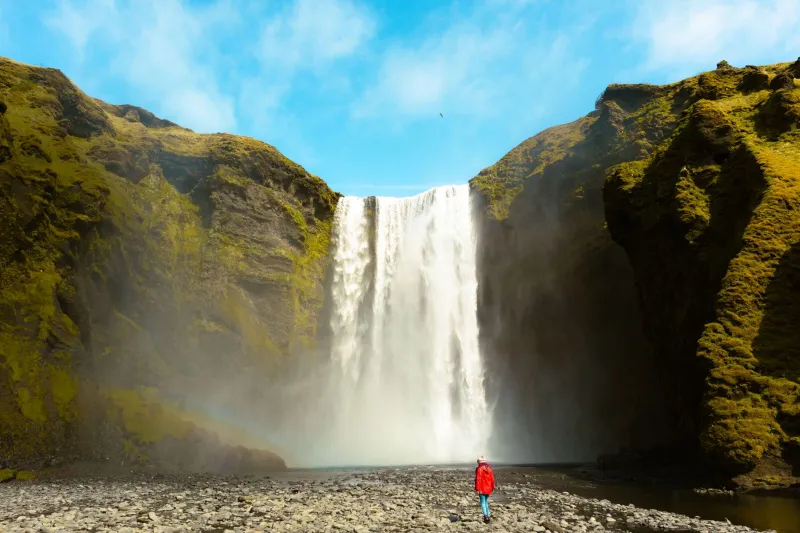
There's a waterfall in Iceland that sits about forty minutes off the Ring Road. No signs point to it. It doesn't have a hashtag. On a Tuesday in July, you can stand there completely alone and feel like you discovered something the rest of the world forgot about. Two hours away, at a waterfall you've definitely seen on Instagram, tour buses are lined up before 8 a.m. and visitors are asked to queue for photos.
Both waterfalls are stunning. Only one of them will ever make your feed.
That gap — between what's algorithmically visible and what's genuinely worth seeing — has become one of the defining tensions in modern travel. And for a growing number of American travelers, it's starting to feel less like a minor inconvenience and more like a real problem worth solving.
The Loop We're All Stuck In
Here's how it works, roughly: You search for "best places to visit in Portugal." The algorithm surfaces content that already has high engagement. High engagement means it's been seen, shared, and saved by a lot of people — which means it's already popular. You add those places to your list. You go. You post. The engagement cycle continues. The same five neighborhoods in Lisbon get more famous. The village two hours south that a local food writer once called "the most honest place in Portugal" stays invisible.
Travel writer and longtime My Travelling contributor Sarah Hennessey puts it bluntly: "The algorithm isn't showing you the world. It's showing you a highlight reel of the world that's already been approved by the crowd. There's a huge difference."
She's spent the last several years deliberately seeking out places that don't perform well on social media — not because she's contrarian, but because she's noticed that the most memorable trips she's taken have almost never involved a destination she found through a feed.
"There's a psychology to it," she says. "We gravitate toward validated destinations because they feel safe. Someone else already went and came back with good photos. That's social proof. But social proof and actual quality are two completely different things."
What Happens to the Places That Go Viral
Ask anyone who grew up in a place that became an Instagram hotspot and you'll hear a version of the same story. The cafés that locals loved get replaced by ones optimized for photos. Parking becomes a crisis. Weekends feel like a theme park version of what the town used to be.
Maria Castillo, who grew up in a small coastal town in Northern California that shall remain unnamed for reasons that will become obvious, watched this happen in real time. "It went from a place where people actually lived to a backdrop," she says. "The hardware store closed. A 'vintage aesthetic' clothing boutique opened. People drive three hours to take a photo in front of a mural that wasn't even there five years ago."
This isn't just an aesthetic complaint. It's an economic and cultural displacement. When a place becomes famous for looking a certain way online, it tends to start optimizing itself for that image — often at the expense of the actual community that made it interesting in the first place.
The paradox is sharp: the algorithm discovers a place because it's authentic. The attention the algorithm brings destroys that authenticity. And then the algorithm moves on.
Breaking the Suggestion Loop
So what do you actually do about this? A few approaches have started gaining traction among travelers who've gotten frustrated with the cycle.
Go one layer deeper on search. Instead of searching "best places in Colorado," try searching for regional food blogs, local newspaper travel sections, or community forums for specific towns. The Colorado Sun's travel coverage, for example, regularly features places that never trend on Instagram. Local knowledge lives in local media.
Use maps, not feeds. Pull up Google Maps or a paper atlas and zoom into a region you want to visit. Look for towns with names you don't recognize. Search those names. If the top results are local government websites and regional news articles rather than travel influencer content, that's a good sign.
Ask people who live there, not people who visited. This sounds obvious but it's underused. Reddit's city and state subreddits are genuinely useful for this. Locals answer questions differently than tourists do. They'll tell you about the diner that's been there since 1974 and the hiking trail that floods every spring and the neighborhood block party that happens the third Saturday of August. None of that makes it onto anyone's feed.
Deliberately search for the adjacent town. Whatever destination is trending, look at what's nearby. The overflow crowds tend to stay concentrated. Ten miles away, things often look completely different.
The Quiet Comeback of Slow Research
There's something almost countercultural about spending two hours reading a regional guidebook from 2009 to plan a trip. But a lot of experienced travelers have started doing exactly that — not because old guides are always accurate, but because they surface places that predate the algorithm entirely.
Libraries are genuinely underrated for this. The travel section at your local branch is full of books that describe destinations before they were discovered, overcrowded, or optimized. Some of those places have faded. Others are exactly as described and somehow still flying under the radar.
Hennessey keeps a running list of what she calls "orphaned destinations" — places mentioned in older travel writing that have never broken through to mainstream visibility. "Some of them you get there and you understand why they didn't take off," she admits. "But some of them are just extraordinary. And the fact that nobody's there makes them more extraordinary."
A Different Kind of Reward
None of this means Instagram travel is worthless or that popular places aren't worth visiting. Yellowstone is popular for a reason. The French Quarter is crowded for a reason. There's real value in shared experience and in seeing the places that have shaped our collective travel imagination.
But there's a different kind of reward available when you find something the algorithm never got to. It's harder to explain and impossible to capture in a single photo. It has something to do with the feeling of being genuinely surprised — of arriving somewhere with low expectations and leaving with a story you can't stop telling.
That waterfall in Iceland doesn't need a hashtag. It just needs you to be willing to turn off the feed long enough to find it.