Coming Home to a Place That No Longer Fits: Making Peace With the Person Travel Made You
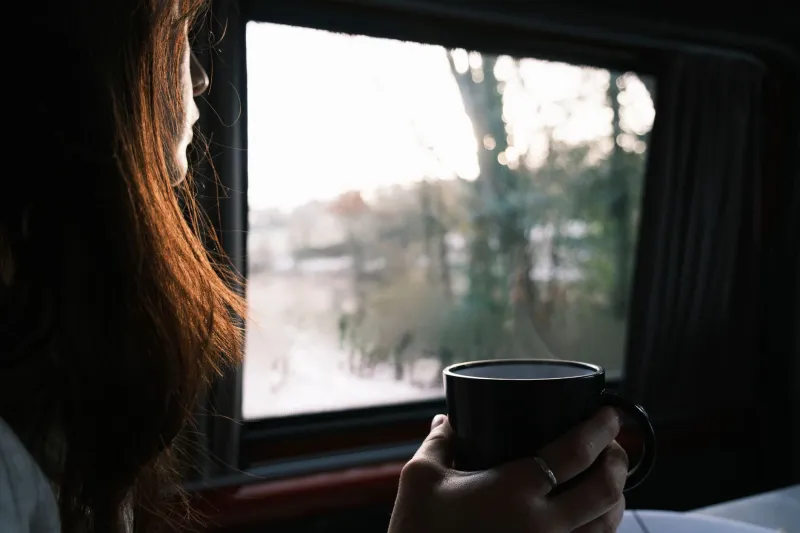
Jenna Kowalski came back from six weeks in Southeast Asia on a Tuesday. By Thursday, she was sitting in the parking lot of a Target in suburban Ohio, crying in her car, unable to explain why.
"Everything just felt so loud and so much," she says. "The choices. The size of everything. The way nobody made eye contact. I'd been gone for six weeks and I felt like a stranger in a place I'd lived my whole life."
What Jenna experienced has a name — reverse culture shock — and it's one of the least-talked-about parts of traveling seriously. We spend a lot of energy preparing for the adjustment of arriving somewhere new. We almost never prepare for the adjustment of coming back.
Why Home Suddenly Feels Like Somewhere Else
Culture shock in the traditional sense makes intuitive sense. You land in a new country, everything is unfamiliar, your brain works overtime trying to interpret new rules and customs and social cues. Of course that's disorienting.
But reverse culture shock catches people off guard because the logic feels backward. This is your home. You grew up here. You know how the grocery store is organized. Why does it feel wrong?
The short answer is that travel changes you faster than home changes. You've spent weeks or months recalibrating — adjusting your sense of what's normal, what's necessary, what's worth paying attention to. Then you step back into an environment that hasn't shifted at all, and the mismatch is jarring.
"It's not that home got weird," says Marcus Webb, a travel writer based in Portland who has returned from long trips more times than he can count. "It's that you got different. And different-you doesn't quite fit into the grooves that old-you wore into the couch cushions."
That metaphor lands. The grooves are still there. They just don't match your shape anymore.
The Specific Things That Throw People Off
Talk to enough Americans who've traveled seriously and patterns start to emerge in what hits hardest coming home.
The pace. After weeks of moving slowly through places — lingering over meals, walking everywhere, having unscheduled afternoons — the speed of American daily life can feel genuinely overwhelming. The commutes, the packed schedules, the pressure to be productive every hour. It's not new. You just forgot it was there.
The smallness of everyday conversation. When you've been talking to strangers about their lives, their countries, their histories — conversations that had real stakes and genuine curiosity behind them — coming back to small talk about the weather and office politics can feel deflating in a way that's hard to articulate without sounding insufferable.
"I didn't want to be that person who couldn't stop talking about their trip," says Dana Flores, who spent three months traveling through South America after finishing grad school. "But I also didn't know how to just... go back to normal conversations. Everything felt surface-level. I felt like I was acting."
The abundance. This one surprises people. Coming back to American-sized portions, American-sized stores, and American-sized everything after time spent in places with less material excess can trigger a kind of low-grade guilt or confusion that's hard to shake.
The loneliness of not being understood. Your friends are happy you're back. They want to hear about it. But there's a limit to how much they can absorb, and you can feel that limit pretty quickly. The stories that felt transformative start to flatten in the telling. You end up saying "it was amazing" because the real version takes too long and requires context nobody has.
The Part Where It Gets Complicated
Here's what makes reverse culture shock genuinely hard rather than just temporarily uncomfortable: it can make you feel ungrateful.
You have a home to come back to. You have people who missed you. You have a bed and a kitchen and a life that kept going while you were away. Feeling disoriented by all of that can seem like a luxury problem — and that shame can make it harder to process what's actually happening.
But disorientation isn't ingratitude. It's just what happens when a person grows faster than their environment does. Giving it a name and treating it like a real transition — rather than something you should just snap out of — makes a significant difference.
What Actually Helps
A few things come up consistently among travelers who've navigated this transition well.
Give yourself a re-entry window. Don't schedule your first week back with social obligations and catch-up commitments. You need decompression time just as much on the return as you did at the start of a trip. Treat it like jet lag for your identity.
Write it down before it fades. The clarity you have about your own life immediately after a significant trip is temporary. Home has a way of absorbing you back into its rhythms faster than you expect. Journaling in that first week — not about the trip, but about how home feels — can help you hold onto the perspective before it slips.
Find your people. Not everyone who's traveled will understand what you're feeling, but some will. Travel communities — online forums, local travel clubs, even a group chat with friends who've done similar trips — can provide the kind of understanding that's hard to find with people who haven't been through it.
Bring something back into your daily life. Not a souvenir. A practice. If you loved the habit of slow morning coffee in a café, create a version of that at home. If you thrived on walking everywhere, build walks into your routine. The goal isn't to pretend you're still traveling — it's to keep some of what the road gave you alive in the life you're actually living.
Let yourself grieve it a little. The trip is over. That's a real loss, and it's okay to feel it. The people you met, the version of yourself that existed in motion, the lightness of having no fixed address — those things are worth mourning briefly. Just don't let the mourning become the whole story.
The Person You Brought Back
Marcus Webb says the best reframe he's found is this: reverse culture shock isn't a problem to solve. It's evidence that something real happened.
"If you came back exactly the same," he says, "what was the point?"
Jenna eventually stopped crying in the Target parking lot. She drove home, made tea the way she'd learned to in Thailand, sat with it for a while, and started writing down everything she didn't want to forget. She still lives in Ohio. She still goes to Target. But she says she moves through her regular life differently now — with a little more curiosity, a little less assumption.
"Home is still home," she says. "It just took me a while to figure out how to be a new version of me inside of it."
That's probably the most honest summary of reverse culture shock anyone could offer. The road changes you. Coming home is just the work of figuring out what to do with that.